
Decide what the component code is describing
FDA separates seven code types. Annex A describes the device problem; Annex G describes the component; Annexes B, C and D address investigation type, findings and conclusion; Annexes E and F address the person's clinical signs or conditions and the health impact. Importers and user facilities complete the F10 code fields using A, G, E and F. Manufacturers complete H6 using all seven types. A component code therefore occupies one part of a broader account of the event. 1
That separation prevents a common reasoning error, whether or not it has occurred in a particular organization: “the image was intermittent, a board was exchanged, therefore the board caused the event.” The first statement is an observation. The second describes a service action. The third is a causal conclusion requiring its own support. The component code describes the part involved; the service narrative and investigation fields document the action taken and the basis for any causal conclusion.
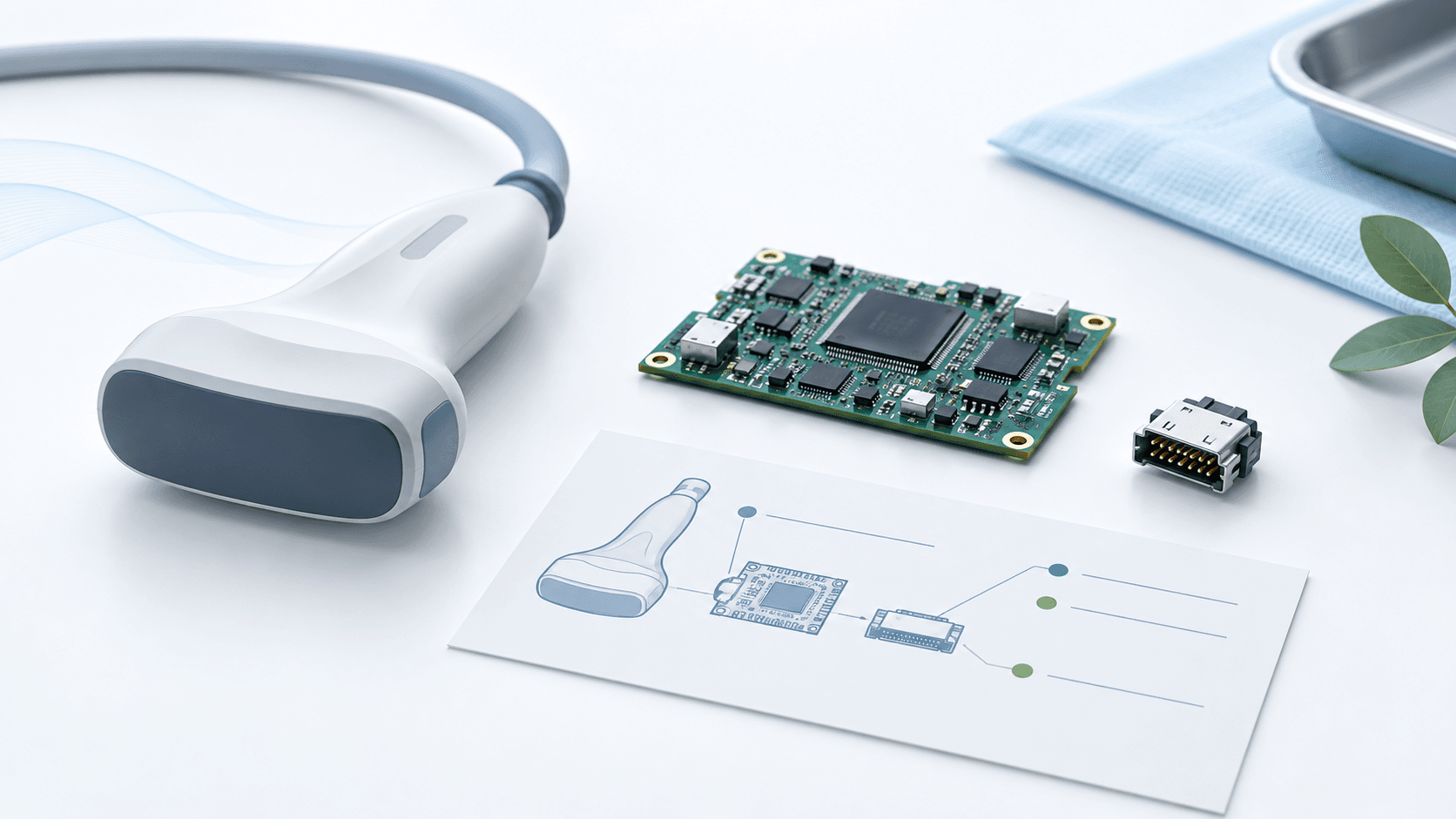
Suppose a hospital sends a scanner for service after an intermittent imaging fault. The engineer records the system model, software version, connected probe, circumstances of occurrence and diagnostic findings. If the service record identifies a specific board as involved, a circuit-board term may be a candidate. If the problem has not been localized, selecting the board simply because a replacement was ordered would make the regulatory description more specific than the evidence. The unresolved state belongs in the narrative and relevant investigation fields, not behind an invented certainty.
FDA's instructions explicitly accommodate investigations that are still in progress. For manufacturers, they identify possible pending selections for investigation type, findings and conclusion—FDA codes 4118, 3233 and 11 respectively—and call for follow-up reporting with different selections after the investigation is complete when these are used. Pending selections preserve the investigation's unresolved status. 1
There is a second boundary to check before choosing Annex G terms. The workbook's Annex G instructions say the terms describe parts or components involved in an incident and that the Annex G term should not be used when the component is also a stand-alone device. Establish separately whether the report concerns a component of a system or a stand-alone device. The responsible reporter must establish that reporting context rather than use a component code as a substitute for device identification. 2
In practice, the handoff should distinguish the device under report from its affected part. Record both identities where known, including the manufacturer's part number and revision, and state any uncertainty about the relationship. This avoids turning a parts catalog's naming convention into a regulatory classification decision.
Read the definition and the hierarchy together
The current FDA workbook contains an Annex G hierarchy and a combined table of usable codes. These views serve different purposes. The hierarchy shows where a term sits and which more detailed children are available. The combined sheet supports code lookup and processing. Use the hierarchy sheet to recover relationships omitted from a flattened export. 2
The following terms are useful reference points, not a universal ultrasound coding crosswalk:
| Term | FDA code | IMDRF code | Position in the published hierarchy | Meaning relevant to review |
|---|---|---|---|---|
| Circuit Board | 427 | G02005 | Electrical and Magnetic → Circuit Board | A nonconducting board carrying conductive tracks and electronic components that form a circuit |
| Transducer | 522 | G0201206 | Electrical and Magnetic → Discrete Electrical Component → Transducer | An electrical component that converts one form of energy into another |
| Probe | 918 | G04102 | Mechanical → Probe | A component designed to reach into a location for manipulation or measurement |
| Connector/Coupler | 4733 | G04034 | Mechanical → Connector/Coupler | A link between parts allowing disconnection and reconnection |
| Male | 4783 | G0403402 | Mechanical → Connector/Coupler → Male | A connector with a male design |
| Female | 4784 | G0403403 | Mechanical → Connector/Coupler → Female | A connector with a female design |
Source: FDA MDR Adverse Event Codes workbook, Annex G and Combined sheets, retrieved 11 October 2026. Definitions are condensed; use the current full dictionary and submission instructions for the report. 2
The hierarchy makes two distinctions visible. First, code 522 appears under a discrete electrical component branch; code 918 appears under the mechanical branch. Second, circuit board and probe each have published ancestors even if an extracted parent field is blank. Neither observation establishes that one code is categorically forbidden whenever an ultrasound probe is involved.
The review question is more precise: which term describes the object actually implicated in the event, at the supported level of detail? A complete scanhead, an internal energy-converting element, a connector and a cable describe different physical objects. Commercial documents may use “probe” and “transducer” for the same assembly, while the regulatory dictionary assigns terms according to its own definitions. If the affected object remains unidentified, obtain the missing evidence before choosing a more specific label.
FDA also says not to select both a parent and its child merely to express the same component: the child already belongs to the parent's set. “Lowest level” means the most detailed accurate selection needed for the event, not the longest code that can be found. If the evidence supports a connector but leaves its subtype unresolved, retain the supported level of specificity. 1
What the 2026 connector additions change
FDA's update log attributes four new Annex G terms and six modifications to the 17 August 2026 IMDRF maintenance update. The additions include G0403402 and G0403403, which the current workbook maps to male and female connectors. The change log also identifies G07001, G07002 and G07003 among the modified terms. A local code list that predates that release deserves a version check, particularly if an organization has hard-coded picklists or mappings. 3
The new connector terms support a more specific description when the record supports it. The side and subtype of a particular ultrasound connection still require physical identification. Record the actual connector on the probe and console sides separately. Obtain the actual connector description, part documentation or suitably clear images, and preserve which physical item was examined.
An illustrative intake comparison shows what changes:
| Intake statement | What can reasonably be carried forward | What remains unresolved |
|---|---|---|
| “Probe connection problem” | Reported symptom and suspected location | Which device or component, which connector, and whether the location has been verified |
| “Damage visible on the identified connector; images and part label attached” | A documented observation tied to a physical item | Functional significance and whether it explains the event |
| “Qualified investigation identifies the connector involved; subtype documented” | A candidate for the most detailed supported connector term | Final reporting selection, investigation conclusion and any other affected components |
These are hypothetical evidence states, not test results or FDA-prescribed phrases.
As an editorial data-management recommendation, preserve the vocabulary version and decision context of historical reports. A current mapping table can identify a more specific term now available, but automatically rewriting every older connector record would imply knowledge those older records may never have contained. For retrospective recoding, define the purpose, use the original evidence and preserve an audit trail. These controls are proposed data-management practices, beyond the vocabulary changes themselves.
The same restraint applies to analytics. An increase in a new connector subtype after a vocabulary update may reflect new coding availability, a change in data capture, a real change in events or some combination. Distinguishing those explanations requires evidence beyond counts. A service organization comparing periods should first establish whether the category definition and available level of detail are comparable.
Handle unknown components without inventing a diagnosis
The current dictionary contains three fallback terms whose names can look deceptively interchangeable. Their full definitions and the FDA filing instructions need to be read together. Each term describes an evidence state; none assigns a documentation-quality grade or supplier causation. 1 2
| FDA code | IMDRF code | Current term | Scope of the definition |
|---|---|---|---|
| 4755 | G07001 | Part/Component/Sub-Assembly Term not Applicable | No distinct component, or linking the incident to a single part is inappropriate; includes a problem affecting the overall device rather than a specific component |
| 4756 | G07002 | Appropriate Component Term/Code not Available | Other terms describe the component inadequately; use only when no other feasible code exists and document the preferred term |
| 4776 | G07003 | Insufficient Component Information | Information is inadequate to classify the component or determine whether a component is affected |
Source: current FDA workbook. Apply this definition comparison alongside the F10 and H6 instructions. 2
The operational instruction is especially important: in both F10 and H6, FDA tells reporters to select 4755 when the failure or problem cannot be linked to a specific part, component or subassembly. Apply that filing instruction even though the dictionary also contains an insufficient-information term, 4776. If the facts present a genuine ambiguity between dictionary wording and the submission scenario, escalate it through the reporting process rather than let a service intake form decide silently. 1
Distinguish a genuinely missing term from an incomplete search of the dictionary. Its definition requires that no other feasible term adequately describes the component and asks for the preferred term to be documented. A team should search the current hierarchy before concluding that the vocabulary lacks an appropriate choice. 2
Document how later findings resolve or change the initial account so the event history remains coherent as the investigation develops.
Build a service handoff that the reporter can use
For an ultrasound service organization, a practical improvement is to separate three linked records: the observed event, the component evidence and the work performed. They may live in one system or document, but their meanings should remain distinguishable. This is a proposed service-evidence structure, not an additional FDA-mandated form.
The event section should preserve the reporter's description, when and under what conditions it occurred, the system and connected equipment identities, and the reported patient or operational consequences. Retain uncertainty in the user's report until a finding resolves it. If the original description is ambiguous, retain it and document the clarification.
The component section should identify the examined item using the information actually available: manufacturer, model, serial or part number, revision and location in the system. Attach appropriate label images and relevant inspection or test records. Distinguish “reported by the user,” “observed during inspection” and “supported by investigation.” Where applicable, record non-reproduction of the event, non-return of the component or the specified limits of inspection; preserve the resulting uncertainty about any failed subcomponent.
The service section should state what was repaired, replaced or left unchanged, the applicable testing performed and its results, and who authorized the service disposition. A repair action is evidence of what was done; it is not automatically proof of original causation or a complete release-to-use decision. Qualified personnel must follow the relevant equipment instructions and facility procedures. Bench-level repair and work on energized equipment are outside this article's scope and require appropriately qualified personnel.
The resulting handoff can be checked against a short acceptance matrix:
| Handoff element | Acceptance criterion | Why it matters to the reporting decision |
|---|---|---|
| Device and component identities | The device under report and the examined part are distinguishable | Avoids using Annex G as a substitute for device identification |
| Observed problem | Original report and verified observations are separately labeled | Avoids converting a symptom into a causal conclusion |
| Component involvement | Each candidate term can be traced to a supported finding | Keeps specificity proportionate to evidence |
| Investigation status | Pending questions and completed findings are explicit | Supports consistent investigation coding and follow-up |
| Work and testing | Actual actions and results are recorded without unsupported guarantees | Separates service disposition from event causation |
| Vocabulary version | Current code and hierarchy checked by the responsible reporting team | Avoids stale picklists and unsupported retrospective recoding |
The reporting entity still determines reportability, the applicable deadline, final code selection and follow-up obligations. A service provider can supply evidence without representing that it has assumed those responsibilities. A contract or workflow should make that division visible, particularly when multiple organizations possess different parts of the event record.
Where Rongtao fits in the evidence chain
Rongtao's role is relevant when the buyer needs ultrasound board, probe or replacement-part service evidence. Start with the actual service scope, use the probe-repair route for probe-specific enquiries, and review the quality information when evaluating the evidence expected from a service supplier. The regulatory reporting decision remains with the responsible organization; assess the supplier's testing practice separately from FDA's coding requirements.
For a quote-ready enquiry, provide the OEM and system model, manufacturer part number and revision where available, clear label photos, the fault description or exact error text, the quantity and destination. For an incident-related item, also identify what information is needed by the reporting team and preserve the original event evidence. Avoid sending unnecessary patient-identifying material in a commercial enquiry.
Use the parts catalog to identify candidate items, not to infer that similar names establish interchangeability or that a past listing guarantees stock. A prospective repair or replacement should be confirmed against the exact configuration and service scope. If the fault remains unlocalized, state that openly in the contact request and distinguish the quotation's assumptions from a regulatory component selection.
The central conclusion is that better coding begins before the code is selected. The 2026 vocabulary can describe a supported finding more precisely; the finding still requires evidence. Preserve the difference between a symptom, an involved component, an investigation conclusion and a service action. That gives both the repair buyer and the responsible reporter a stronger basis for their separate decisions.